“There’s no such thing as a natural disaster”
Originally published in Expresso, 25th February 2026
If a tree falls on an uninhabited island, does it make a sound?
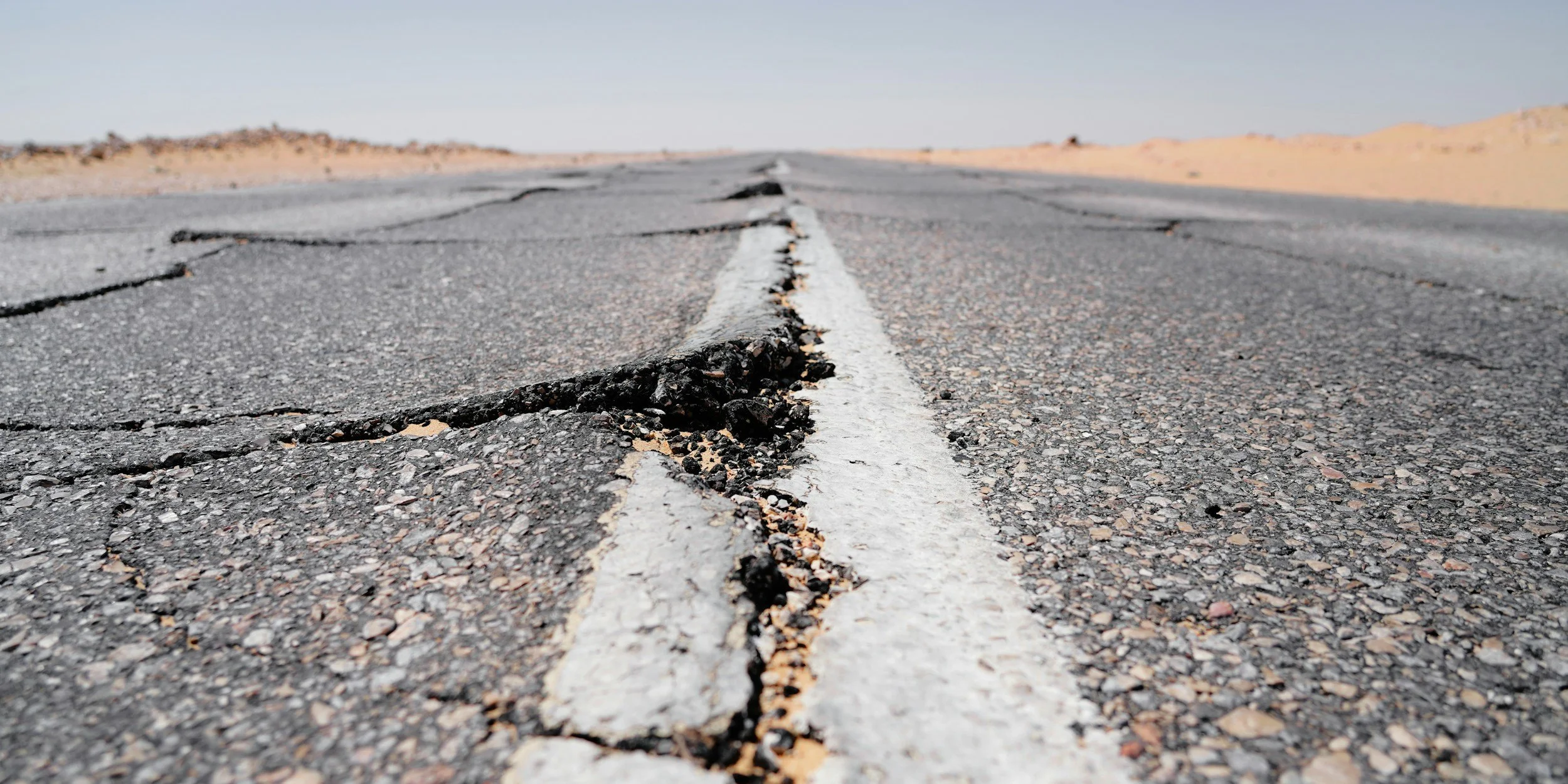
If a tree falls on an uninhabited island, does it make a sound? Physically, no. The falling tree creates vibrations in the air, but sound only exists when those vibrations are captured by an auditory system and interpreted by a brain. Where there is no one, there is no sound. By the same logic, a flood in the Gobi Desert, where not a soul lives, is not a disaster. It is a natural phenomenon. This distinction between natural event and disaster is not a new idea. Nearly two decades ago, in the aftermath of Hurricane Katrina, the geographer Neil Smith wrote "There's No Such Thing as a Natural Disaster," a title adapted for the Portuguese version of this article.
Among those who study the subject, the phrase and the article have become a reference point. In public discourse, however, we continue to speak of disasters as natural. It is time to stop, because if the phenomena are natural, the disasters are political. And if they are political, the way we talk about them matters.
What is a disaster?
According to EM-DAT, the International Disaster Database, a disaster is "a situation or event with at least 10 deaths, 100 people affected, and an overload of local capacity leading to a request for external assistance at national or international level." In 2023, this database recorded399 disasters that caused 86,473 deaths and more than 200 billion dollars in damages. Two thirds were caused by events of natural origin, as opposed to industrial or transport accidents such as derailments. For simplicity, and because they are proportionally among the most deadly, let us focus on earthquakes, which we know all too well. The reasoning applies, however, to all other phenomena.
In 2023, EM-DAT recorded 32 seismic disasters and 62,451 deaths. Of these, a single event, the earthquake sequence that struck the Gaziantep region in Turkey and Syria, accounted for more than 90% of the victims. Why? At first glance, one might blame the characteristics of the earthquake or the geology of the region. The Gaziantep earthquake was the largest of the year, shallow, of high magnitude (M7.8), and struck densely populated areas. But if magnitude, the energy released, explained everything, the magnitude 9.1 earthquake that struck Japan in March 2011, releasing roughly twenty times more energy, would, in direct proportion, have caused more than a million deaths. Despite being devastating, it caused almost three times fewer fatalities than Turkey. The principal difference between these two events was not geological. It was how each country understands and manages risk. And that is political.
What is risk?
Risk is a function of three variables: hazard, exposure and vulnerability. As in any equation, changing one variable changes the result. The hazard, the natural phenomenon itself, is largely beyond our control. We cannot stop tectonic plates from moving or a volcano from erupting. The other two variables, however, depend on political decisions: we can choose where to build (exposure) and how to build (vulnerability). We cannot eliminate these variables entirely, and risk will therefore never reach zero. But we can make choices that reduce their influence, minimising impact or, in many cases, preventing disaster altogether. Let us return to Turkey to understand how.
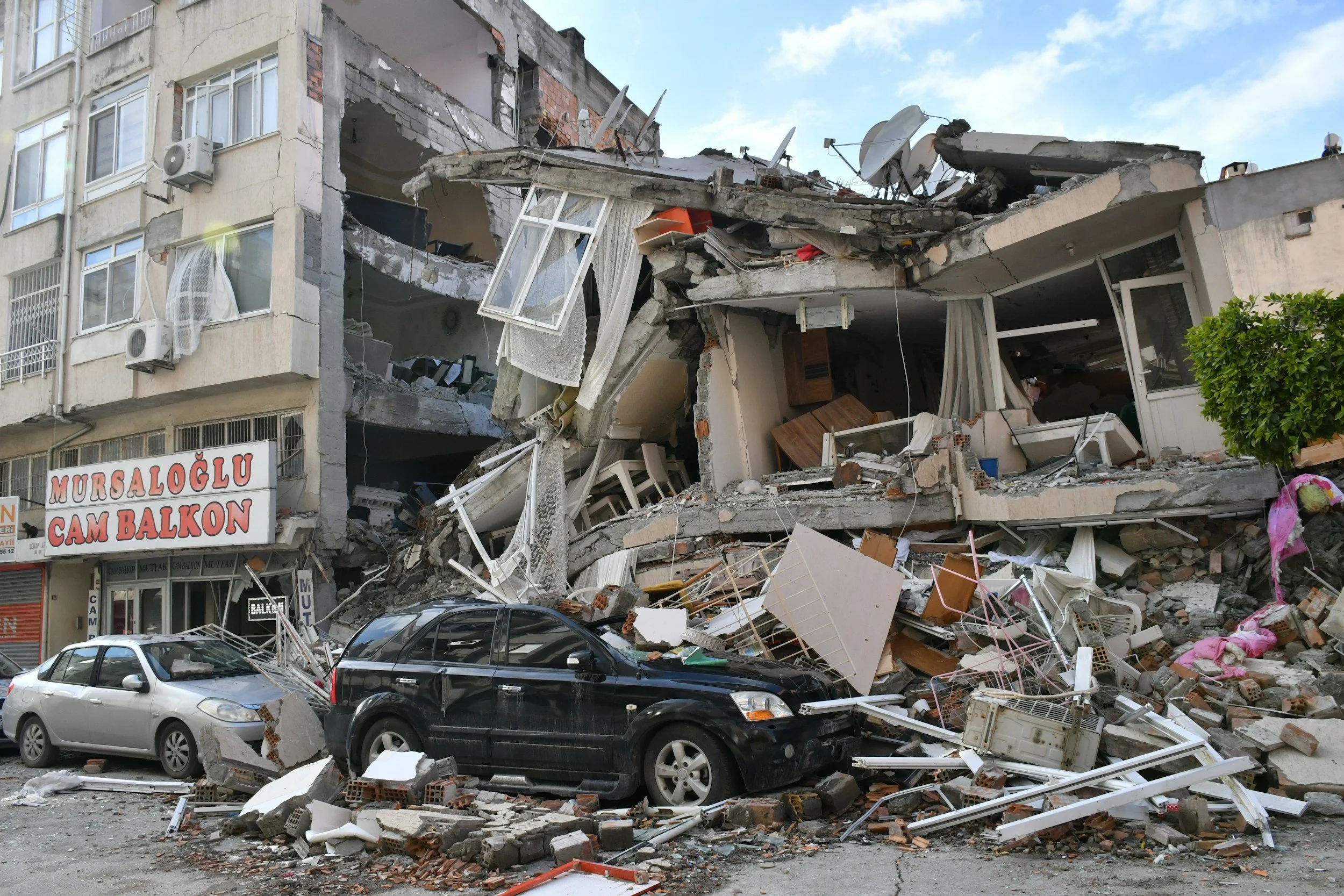
Damages to buildings in the 2023 Turkey- Syria earthquake.
By virtue of its location, compressed between several tectonic plates, the country experiences recurrent seismic activity. Even so, due to the proximity of active and extensive geological faults, certain regions concentrate a higher probability of large-magnitude earthquakes. Gaziantep is one of them. In 2002, researchers analysed stress accumulation along one of the most active faults, the East Anatolian Fault, and identified two sections with high potential to generate large-magnitude earthquakes in the near future. They were not wrong. The first occurred in 2010. The second, in 2023, struck precisely the segment the models had identified as being under the greatest accumulated stress.
Similar studies now allow us to model with growing precision the impact of floods, heatwaves and even pandemics, identify the areas where effects will be most severe, and estimate the vulnerability of infrastructure and populations. From these models we can project scenarios of displacement, mortality, unemployment and recovery time. If current scientific knowledge allows us to anticipate this much, why do we continue to face disasters? By political choice or political negligence.
Following the tragic earthquake of 1999, Turkey strengthened its building codes, requiring new buildings to be designed to withstand seismic events. Economic pressure and urban growth prevailed regardless. The population of Gaziantep grew from around 800,000 inhabitants in 2000 to nearly 2 million in 2023. Despite the widely recognised hazard of the region, political decision-makers authorised, did not prevent, and did not enforce controls on the city's rapid expansion, increasing the exposure of people and infrastructure. Worse, shortly before the 2018 elections, the Erdoğan government approved an urban amnesty programme that legalised millions of buildings that did not comply with technical codes, from unlicensed housing to buildings with additional floors or structural modifications. Around 13 million apartments are estimated to have been non-compliant. In a zone of high seismicity, increasing exposure and vulnerability through political negligence was fatal, above all for the poorest.
Portugal, 1755 - 2025
Turkey is not alone. In Portugal it is widely acknowledged that construction suffers from failures of oversight, including inadequate controls on the strength of concrete. The studies are plentiful. Research from the University of the Algarve estimated that an earthquake similar to that of 1755 could cause around 3,000 deaths and 27,000 displaced persons in that region alone, leaving the majority of public schools vulnerable. Analyses from Instituto Superior Técnico and the National Laboratory of Civil Engineering indicate that hundreds of nurseries and kindergartens across the country operate in old buildings liable to suffer severe damage or even collapse in a major earthquake. The same applies in Lisbon, where several schools require structural reinforcement, and in various central hospitals, for which studies point to a high probability of serious damage in a significant seismic scenario.
The situation worsens when local councils not only authorise but actively promote the construction of essential facilities in high-risk zones. The Champalimaud Centre was built on a riverfront exposed to tsunami risk; its construction authorisation led to the temporary suspension of Lisbon's Municipal Master Plan, voted in the Municipal Assembly. The most recent CUF hospital, in Alcântara, conveniently named CUF Tejo, sits in a valley resting on poorly consolidated substrate. Beyond direct casualties, a large-magnitude earthquake could render both facilities unable to respond in an emergency. There is, admittedly, some good news: although the State initially failed to include seismic isolation systems in the specifications for the future Hospital de Lisboa Oriental, even though the cost would have represented a negligible fraction of the total investment, pressure from dozens of university professors led the Court of Auditors to impose the necessary correction. Even so, with 22.2 billion euros available from the Recovery and Resilience Plan, not a single cent was allocated to the seismic structural reinforcement of existing buildings.
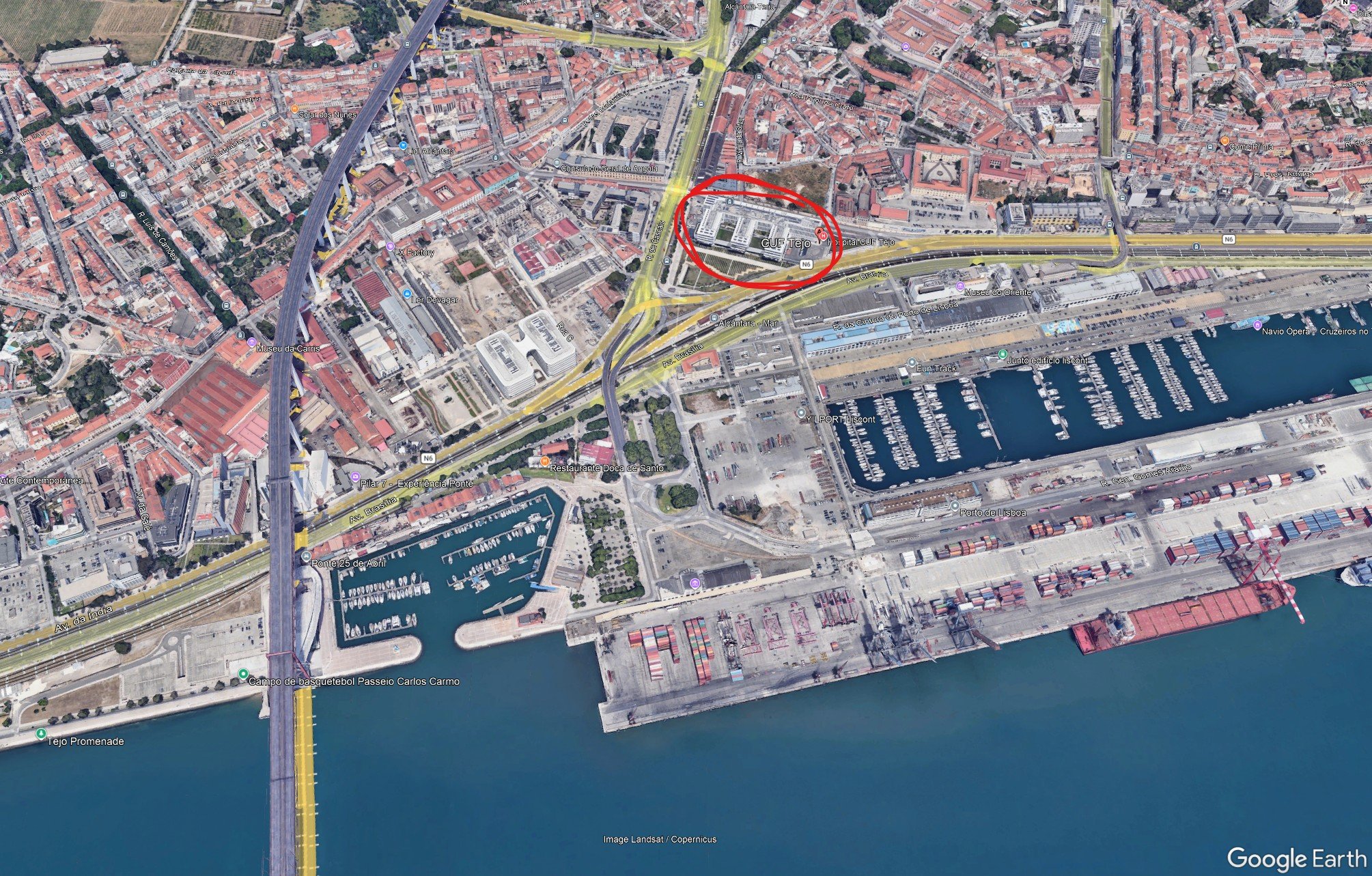
CUF Tejo Hospital, just 500 m from the river front, exposed to tsunamis and sitting on unconsolidated sediments.
Not just semantics
If there is so much to be done, why concern ourselves with semantics?
Because words shape the way we think and act. To say that "disasters are natural" is to assert that they happen beyond any power we have to prevent them. That is an outright falsehood. The evidence shows that while the phenomena are natural, disasters result from human actions and decisions that increase the exposure and vulnerability of communities. Since all human decisions are political, including the decision to do nothing, to say that "disasters are natural" is to absolve those who, by action or inaction, make the decisions that worsen those two variables. It diverts attention from the need to implement policies that reduce risk. And it condemns the most disadvantaged populations, more vulnerable and always disproportionately affected, not least because they frequently have no option but to settle in high-risk areas, to an endless cycle of poverty and catastrophe.
So the next time a political official declares, as the Mayor of Lisbon did at the presentation of the LxResist project, that "catastrophe will always exist," treating it as inevitable, implying nothing can be done, or invoking climate change to deflect onto a supranational geopolitical plane something that can be mitigated locally, be sceptical. The scientific knowledge and technical capacity for preparation, mitigation and adaptation most likely exist. What will have been lacking are the political decisions. Decisions such as permitting urban expansion along the banks of the Mondego dykes, or maintaining a fully overhead electricity network despite recommendations to the contrary: decisions that created the conditions of exposure and vulnerability which turned a natural event into a disaster.